FRAMEwork was a five-year EU Horizon 2020 project (2020–2025) testing whether groups of neighbouring farmers, working collectively across farm boundaries, can meaningfully improve biodiversity and ecosystem services at landscape scale. Bringing together 18 consortium partners, the project established 11 Farmer Clusters in 10 countries, engaging over 120 farmers and implementing practical management changes across 240+ square kilometres of European farmland. Our project adopted a bottom-up approach that explored voluntary farmer collaboration, technical training, peer learning and community engagement, while giving weight to local priorities. This helped co-develop practical solutions, evidence and tools responding to current challenges. By fostering farming systems tailored to regional conditions and sustainability priorities, the project placed farmers and their communities at the centre of efforts to enhance biodiversity and ecosystem services.
The project developed standardised but flexible biodiversity monitoring protocols for habitats, vegetation, insects and farmland birds, applied by specialist research teams across all 11 clusters to generate locally valuable baselines and cross-comparable data for the project’s wider research programme. Over 12,000 hectares of farmland were monitored, with more than 40,000 biodiversity observations recorded. Fieldwork encompassed 121 square kilometres surveyed, including 221 km of bird transects, 243 km of pollinator transects, 83,105 square metres of vegetation and 62,436 hours of pan-trapping amounting to 738 working days of field data collection. The Before-After-Control-Impact experimental design underpinning the monitoring approach was published as a standardised and replicable protocol, providing a practical legacy for future landscape-scale monitoring initiatives.
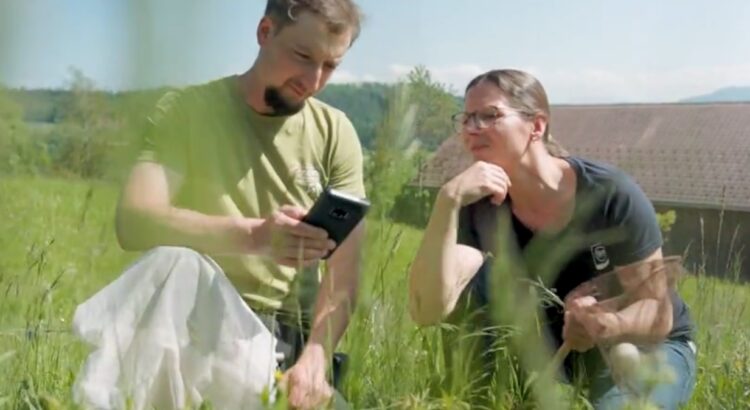
Teams recorded the difference in biodiversity between Cluster farm areas where measures were implemented and control farm areas. All resulting data is openly accessible through the project’s Data Hub, a metadata catalogue and data repository built on GeoNetwork and FAIR data principles. Alongside professional monitoring, the project invested heavily in Citizen Science approaches to biodiversity recording at scale, with 13,000 citizens taking part in 38 biodiversity monitoring events across nine countries. Through the project’s Biodiversity Observatory on iNaturalist, participants logged more than 10,000 observations and identified 2,190 species. Over 70 citizen science protocols developed and used by the project were published.
More information: